What the Book is About
The Sacred and the Profane is one of Mircea Eliade’s most influential works, written as a concise yet conceptually dense introduction to his broader project: the phenomenology of religion. It is not merely a descriptive study of religious beliefs, nor a historical survey of traditions. Rather, it seeks to uncover the fundamental structures of human experience as they appear when the world is lived as sacred, in contrast to when it is lived as purely profane.
Eliade begins from a decisive conceptual opposition: the sacred and the profane are not simply two categories among others, but two distinct modes of being in the world. Religious humanity (what he calls homo religiosus) inhabits a cosmos saturated with meaning, presence, and power; modern secular humanity inhabits a desacralized world, where reality is flattened into neutral, homogeneous space and time. The book aims to reconstruct, through comparative examples, how the sacred is experienced, structured, and enacted across cultures.
At the heart of Eliade’s project is a methodological shift away from earlier thinkers such as Rudolf Otto, whose notion of the numinous emphasized the irrational, emotional dimension of religious experience. Eliade explicitly acknowledges Otto’s contribution but expands the inquiry: the sacred is not only a feeling (terror, fascination), but a total structure of reality as revealed to human consciousness.
Thus, the book is not about “religion” in the doctrinal sense. It is about how reality itself is disclosed differently depending on whether one lives within a sacred or profane horizon.
Intellectual Framework
Eliade’s conceptual architecture rests on a few foundational ideas, which structure the entire book and will unfold across its chapters.
1. The Sacred as “Wholly Other”
The sacred is defined negatively at first: it is that which is not profane. But this opposition is not merely conceptual—it is ontological. The sacred appears as something “wholly other,” irreducible to ordinary experience. Yet, paradoxically, it manifests within the ordinary world.
This paradox leads to Eliade’s central concept.
2. Hierophany: The Manifestation of the Sacred
Eliade introduces the term hierophany to describe any act in which the sacred reveals itself. A stone, a tree, a mountain, or a human figure can become the locus of such manifestation—not because of their intrinsic material properties, but because they disclose a reality beyond themselves.
The key paradox is this:
- The object remains what it is (a stone is still a stone),
- Yet it becomes something more than itself, a bearer of sacred presence.
Thus, the world is not divided into sacred objects and profane objects in themselves; rather, the sacred reveals itself through the profane, transforming perception.
3. Sacred = Reality, Power, Being
For Eliade, the sacred is not merely valued—it is identified with reality itself. In archaic societies, to encounter the sacred is to encounter what is fully real, enduring, and efficacious. The profane, by contrast, is associated with transience, illusion, or lack of ontological density.
This leads to a crucial anthropological insight: human beings desire the sacred because they desire to participate in reality, to be grounded in what truly is.
4. Two Modes of Being: Sacred vs Profane
Eliade insists that sacred and profane are not simply two domains but two existential conditions.
- The religious person lives in a structured, meaningful cosmos, where every act (eating, sexuality, work) can become a sacrament.
- The modern secular person lives in a desacralized world, where the same acts are reduced to biological or social functions.
This distinction is not merely historical—it is philosophical and anthropological. It concerns the possible ways of inhabiting existence.
5. The Project: Reconstructing Sacred Experience
Eliade’s method is comparative and phenomenological. He draws examples from diverse cultures—Mesopotamian, Indian, Chinese, indigenous traditions—not to collapse them into sameness, but to reveal structural invariants of religious experience.
He is aware of the dangers of superficial comparison, yet he insists that such cross-cultural analysis is necessary if one wants to grasp the essence of the sacred as a human phenomenon, rather than its historical variations.
6. Desacralization and Modernity
A final framing concern appears already in the introduction: modernity represents a radical desacralization of the cosmos.
The “purely profane world” is a recent historical development. Yet, Eliade suggests, even modern individuals retain latent traces of sacred structures—hidden in habits, symbols, and unconscious patterns.
Transition Forward
With this framework in place, Eliade proceeds in the book to analyze how the sacred structures fundamental dimensions of human experience:
- space (how the world becomes ordered and centered),
- time (how mythic time differs from historical time),
- nature (as cosmic revelation),
- and human life itself (as potentially sanctified existence).
The next section begins this unfolding with Chapter I: Sacred Space and the Making of the World Sacred, where Eliade examines how space becomes differentiated, oriented, and inhabited through the irruption of the sacred.
Chapter I — Sacred Space and the Making of the World Sacred
Eliade opens the first chapter by turning from abstraction to one of the most immediate dimensions of human existence: space. If the sacred and profane are truly two modes of being, then this difference must be visible in how human beings inhabit the world. What emerges is a striking claim: for religious humanity, space is not homogeneous. It is structured, differentiated, and oriented by the presence of the sacred.
The Non-Homogeneity of Space
For modern, secular consciousness, space is conceived as uniform—an abstract extension, divisible and interchangeable. A street, a room, a field: all are fundamentally equivalent coordinates within a neutral grid.
Eliade argues that this is a historically late perception. For archaic or religious humanity, space is instead qualitatively differentiated. Certain places are radically distinct from others—not by physical properties, but by the fact that the sacred has manifested there.
A sacred place is therefore not just “important”; it is ontologically different. It is a rupture in the uniformity of space, a point where reality breaks through.
This rupture is precisely what Eliade calls a hierophany—a manifestation of the sacred that establishes a fixed point in an otherwise undifferentiated expanse.
The Discovery of the “Center”
From this rupture emerges one of Eliade’s most important ideas: the Center.
A place where the sacred manifests becomes a center of the world for those who inhabit it. This does not mean it is geographically central; rather, it is existentially central. It is the point from which the world is oriented, organized, and made meaningful.
Without such a center, space would remain chaotic, unstructured, and ultimately uninhabitable in a meaningful sense. The sacred center provides:
- orientation (up/down, cardinal directions),
- stability (a fixed reference point),
- and meaning (a connection to ultimate reality).
Thus, to inhabit space religiously is to live in relation to a center.
Foundation as Cosmogony
Eliade deepens this insight by showing that the establishment of a sacred center is not merely symbolic—it is cosmogonic, that is, it reenacts the creation of the world.
When a sacred place is founded—whether a temple, a house, or a city—it is not simply constructed. It is ritually established as a cosmos, set apart from the surrounding chaos. This act repeats the primordial act of creation.
The logic is as follows:
- Before orientation, there is chaos (undifferentiated space).
- The manifestation of the sacred creates a center.
- From this center, the world is structured and made real.
Thus, every founding of a dwelling or sacred site is a repetition of the cosmogony, a re-creation of the world itself.
The Axis Mundi
Closely linked to the idea of the center is the concept of the axis mundi—the cosmic axis that connects different levels of reality.
This axis may take many symbolic forms: a mountain, a tree, a pillar, a temple spire. But structurally, it always represents a point of communication between heaven, earth, and the underworld.

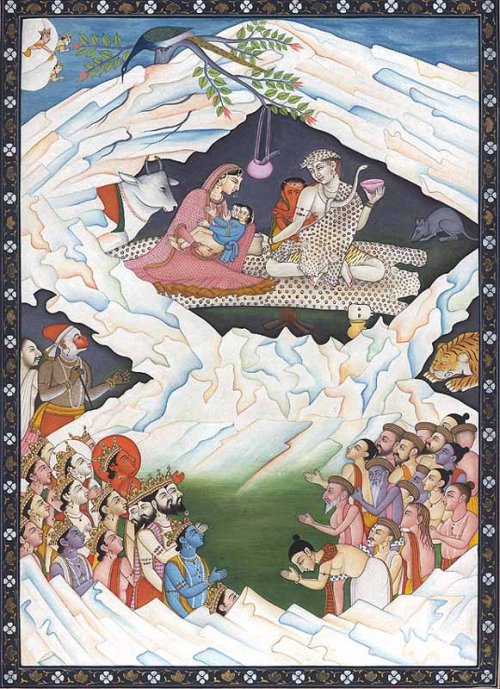


Through the axis mundi, movement between these levels becomes possible. It is the channel through which:
- gods descend,
- humans ascend (ritually or symbolically),
- and communication between realms is established.
This vertical structure reinforces the idea that sacred space is not only differentiated horizontally (center vs periphery), but also vertically stratified.
The Threshold and the Passage Between Worlds
Another crucial feature of sacred space is the threshold—the boundary that separates the sacred from the profane.
A doorway, a gate, or a boundary marker is not merely functional. It signifies a transition between two modes of being. To cross a threshold is to pass from one ontological state to another.
Eliade emphasizes that such transitions are often ritually marked, because they involve real transformations in the structure of experience. The threshold is therefore both:
- a boundary (separating sacred and profane),
- and a passage (allowing communication between them).
The Human Need for Orientation
Underlying all these structures is a fundamental anthropological insight: human beings cannot live in a formless, homogeneous space.
To exist meaningfully, one must inhabit a structured world, anchored by a center and oriented by sacred reference points. The sacred provides this structure.
Without it, space becomes disorienting and existentially unstable. The religious person, therefore, seeks constantly to situate themselves within a cosmos, not within chaos.
Sacred Space vs Modern Space
Eliade contrasts this with modern experience. In a desacralized world:
- space becomes purely geometric,
- centers lose their ontological significance,
- and orientation becomes functional rather than existential.
Yet traces of the sacred persist even in modern life—through symbolic centers (homes, monuments, national capitals), ritualized spaces, and emotional attachments to place.
This suggests that the need for sacred structuring has not disappeared; it has merely been transformed or obscured.
Conceptual Consolidation
By the end of Chapter I, several foundational ideas have been established:
Sacred space is not homogeneous but structured through hierophany. The manifestation of the sacred creates a center, which orients the world. The founding of space is a repetition of cosmogony. The axis mundi connects different levels of reality. Thresholds mark transitions between modes of being. Human existence requires orientation within a meaningful cosmos.
These ideas are not isolated; they will recur throughout the book, especially when Eliade turns to time, where a parallel distinction between sacred and profane will emerge.
Transition
Having shown how the sacred structures space, Eliade now turns to the second fundamental dimension of existence: time.
In Chapter II, he will argue that just as space is divided into sacred and profane, so too is time—leading to the distinction between mythic (sacred) time and historical (profane) time, and to the deeper idea of ritual as a return to origins.
Chapter II — Sacred Time and Myths
If Chapter I established that space is not homogeneous for religious humanity, Chapter II extends this insight into an even more profound domain: time itself. Eliade now argues that just as space is divided into sacred and profane, so too is time. The distinction here is not merely chronological, but existential. There exists a fundamental difference between ordinary, historical time and what Eliade calls sacred time, a time of origins, eternally recoverable.
The Non-Homogeneity of Time
For modern consciousness, time appears as a continuous, irreversible flow. It is linear, measurable, and homogeneous—seconds, minutes, years proceeding in a uniform succession.
Eliade shows that for religious humanity, this is not the case. Time is interrupted, broken, and qualitatively differentiated. Certain moments are radically distinct from others because they participate in the sacred. These are the moments of ritual, festival, and mythic commemoration.
Sacred time is therefore not simply “important time.” It is a different kind of time altogether, one that does not belong to the ordinary flow of duration. It is reversible, recoverable, and fundamentally tied to origins.
Sacred Time as the Time of Origins
The defining characteristic of sacred time is that it is the time in illo tempore—“in that time,” the primordial moment when the world, the gods, and fundamental realities first came into being.
Myths narrate these original events: the creation of the world, the establishment of cosmic order, the founding acts of gods or culture heroes. But these myths are not merely stories about the past. They describe a transhistorical time, a foundational moment that can be re-entered.
This leads to one of Eliade’s central claims: to participate in sacred time is to abolish ordinary time and return to the moment of beginnings.
Ritual as the Repetition of Myth
The bridge between myth and lived experience is ritual.
Whenever a ritual is performed—whether a seasonal festival, a rite of passage, or a religious ceremony—it is not simply commemorating an event. It is reactualizing it. The original event described in myth is made present again.
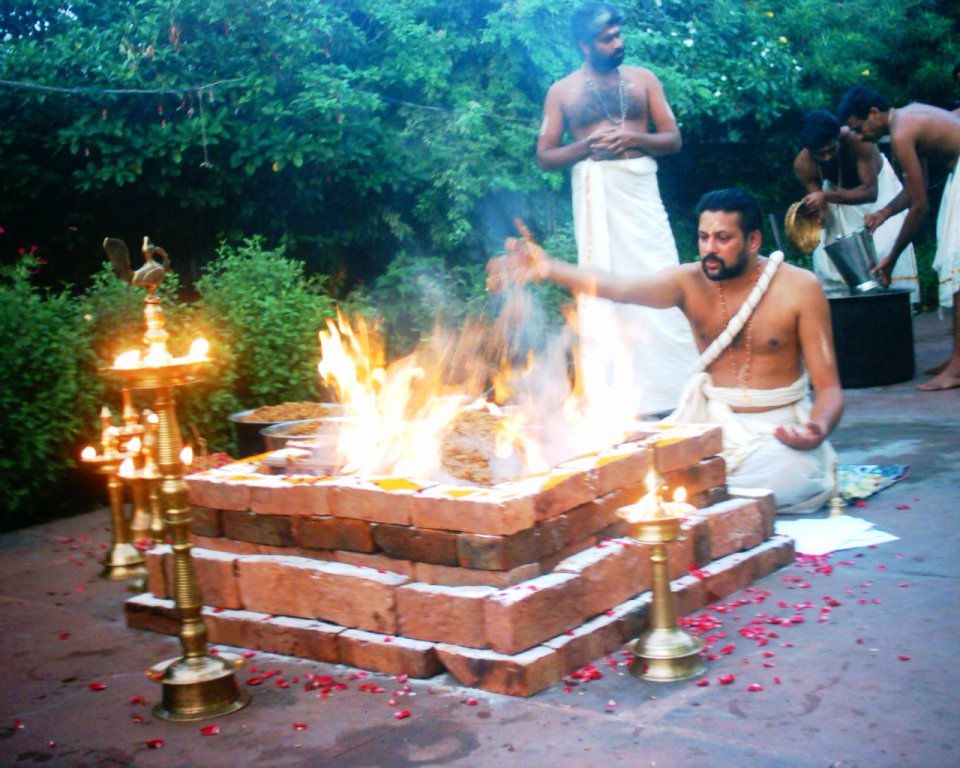



In this sense, ritual is not symbolic in the modern sense of representation. It is ontologically effective. It allows participants to step out of profane time and enter sacred time.
Thus, when a creation myth is ritually reenacted, the world is not merely remembered—it is re-created.
The Eternal Return
From this structure emerges what Eliade elsewhere famously calls the eternal return.
Religious humanity does not experience time as an irreversible progression toward an unknown future. Instead, time is periodically reset through ritual return to origins. Each sacred festival renews the world by reconnecting it with its primordial foundation.
This cyclical structure has several implications:
- History is relativized; it is not ultimate.
- Meaning lies not in novelty but in repetition of archetypal events.
- Renewal is always possible through return to the beginning.
The past is not “past” in the modern sense. It remains accessible, recoverable, and existentially decisive.
Cyclical vs Linear Time
Eliade contrasts this cyclical conception with the modern, historical sense of time.
In modernity:
- time is linear, irreversible, and cumulative,
- meaning is often located in progress or future fulfillment.
In archaic religious consciousness:
- time is cyclical and regenerative,
- meaning is located in origins, not in the future.
This distinction is not merely cultural; it reflects two fundamentally different ways of situating human existence within reality.
Periodic Regeneration of the World
One of the most powerful expressions of sacred time is found in rituals of cosmic renewal—New Year festivals, seasonal rites, and ceremonies marking transitions.
These rituals often involve symbolic acts of destruction and re-creation:
- chaos is ritually evoked or dramatized,
- the old year or world is symbolically dissolved,
- a new creation is inaugurated.
Such practices reveal a deep intuition: the world must be periodically regenerated by reconnecting it with its sacred origin.
Time, in this sense, is not something that simply passes. It is something that must be renewed.
Human Existence in Sacred Time
To live within sacred time is to inhabit a world where every significant act can be grounded in an archetype.
Eating, marriage, work, and social life all gain meaning when they are aligned with primordial models revealed in myth. Life becomes a repetition of divine or heroic patterns.
This is why myth is not optional in archaic societies—it is existentially necessary. It provides the templates through which human life becomes meaningful.
The Modern Loss of Sacred Time
Eliade suggests that modern secular humanity has largely lost access to sacred time. Time has become purely historical, emptied of transcendence.
Yet he also hints that traces remain:
- in holidays and festivals,
- in nostalgia for origins,
- in the human desire for renewal and new beginnings.
Even in a desacralized world, the structure of sacred time persists in disguised or fragmented forms.
Conceptual Consolidation
By the end of Chapter II, Eliade has extended his fundamental opposition:
Sacred time is qualitatively different from profane time. It is the time of origins, accessible through myth and ritual. Ritual does not symbolize but reactualizes primordial events. Time is cyclical, allowing periodic return and renewal. Human life gains meaning through participation in archetypal patterns. Modernity replaces this with linear, historical time, but cannot fully erase the older structure.
Chapter III — The Sacredness of Nature and Cosmic Religion
With the analysis of space and time complete, Eliade now expands the scope of inquiry to the cosmos itself. If sacred space establishes orientation and sacred time enables return to origins, then Chapter III asks a deeper question: how does the natural world as a whole become transparent to the sacred?
The answer unfolds through what Eliade calls cosmic religion—a mode of experience in which nature is not merely physical environment, but a field of hierophanies, a living disclosure of sacred reality.
Nature as a Total Hierophany
Eliade begins from a radical premise: for archaic humanity, nature is never merely “natural.” Every element of the cosmos—sky, earth, water, vegetation, celestial bodies—can reveal the sacred.
This does not mean that nature is worshipped as such. Rather, natural forms become vehicles of manifestation, disclosing dimensions of reality that transcend their physical appearance. As with the sacred stone or tree, nature is not adored for itself, but because it reveals something beyond itself.
Thus, the cosmos becomes a system of signs, each element pointing toward a deeper ontological structure.
The Sky as Transcendence
One of the most universal hierophanies is the sky.
Across cultures, the sky reveals transcendence through its sheer form:
- it is distant, inaccessible, and infinite,
- it stands above all things,
- it remains unchanged while all else transforms.
These characteristics make it a natural symbol of absolute reality, of what is beyond contingency and limitation.
Sky deities often embody this transcendence. Yet Eliade notes an important pattern: in many traditions, these high gods become remote, almost withdrawn from active religious life. The sacred, while initially revealed in the sky, often becomes more concretely experienced through other forms of nature.
The Earth as Fertility and Foundation
If the sky reveals transcendence, the earth reveals immanence.
The earth is experienced as:
- fertile, generative, and maternal,
- the source of life and sustenance,
- the ground upon which all existence rests.
This leads to the widespread symbolism of Mother Earth, a figure embodying both nourishment and stability. The earth is not merely matter; it is a living presence, often personified and ritually engaged.
The contrast between sky and earth introduces a fundamental polarity: transcendence and immanence, distance and proximity, permanence and generation.
Together, they structure a cosmic order that is both vertical and relational.
Waters as Potentiality and Regeneration
Water occupies a distinct symbolic position. Unlike the sky or earth, it is not associated with stable form, but with undifferentiated potentiality.
Eliade shows that water frequently symbolizes:
- the pre-cosmic state before creation,
- dissolution and return to the formless,
- regeneration and rebirth.
Immersion in water—whether through ritual bathing, baptism, or symbolic submersion—often signifies a return to origins, followed by a new beginning.
Water thus embodies both end and beginning, destruction and renewal. It is the medium through which transformation becomes possible.
Vegetation, Cycles, and Renewal
Vegetation introduces another dimension of cosmic religion: the cycle of life, death, and rebirth.
Plants grow, wither, and regenerate in recurring rhythms. This cyclical process becomes a powerful symbol for:
- the renewal of life,
- the continuity of existence beyond death,
- the possibility of regeneration.
Agricultural societies, in particular, develop elaborate religious systems around these cycles. The rhythms of planting and harvest are not merely economic—they are cosmic events, linked to deeper patterns of life and renewal.
Through vegetation, nature reveals not only stability or transcendence, but temporal recurrence, reinforcing the structure of sacred time explored in the previous chapter.
The Unity of the Cosmos
As Eliade develops these examples, a larger insight emerges: cosmic religion is not a collection of isolated symbols, but a coherent vision of the universe.
The sky, earth, water, and vegetation are not separate domains; they are interconnected expressions of a single sacred reality. The cosmos is experienced as:
- ordered, not chaotic,
- meaningful, not arbitrary,
- alive with presence, not inert.
To live religiously in such a world is to participate in a cosmic totality, where every aspect of existence reflects and communicates with the sacred.
Cosmic Religion and Human Existence
Eliade emphasizes that this cosmic vision is not abstract. It directly shapes human life.
Human actions—agriculture, sexuality, social organization—are often aligned with cosmic patterns. Life becomes meaningful when it resonates with the structure of the cosmos.
Thus, cosmic religion integrates:
- natural processes,
- social practices,
- and existential meaning
into a unified whole.
The Gradual Transformation of Cosmic Religion
Eliade also notes that this cosmic form of religion is not static. Over time, it undergoes transformations:
- high sky gods may recede in importance,
- more localized or immanent forms of the sacred may emerge,
- symbolic systems may become more complex or differentiated.
Yet the underlying structure remains: nature continues to function as a medium of revelation.
The Modern Break
In contrast, modern secular consciousness tends to desacralize nature. The cosmos is no longer experienced as a living system of meanings, but as a mechanical or neutral environment.
Nature becomes:
- an object of scientific analysis,
- a resource for exploitation,
- or a backdrop for human activity.
Eliade suggests that this represents not merely a shift in knowledge, but a loss of existential depth. The world is no longer transparent to the sacred.
Conceptual Consolidation
By the end of Chapter III, Eliade has expanded his framework significantly.
Nature is revealed as a field of hierophanies. The sky discloses transcendence; the earth, immanence; water, potentiality; vegetation, cyclical renewal. These elements form a coherent cosmic structure. Human life gains meaning through participation in this cosmic order. Modernity obscures this structure by reducing nature to objectivity.
Chapter IV — Human Existence and Sanctified Life
In the final chapter, Eliade completes the arc of his argument by turning from the cosmos to the human being. If sacred space orders the world, sacred time renews it, and nature reveals its structure, then the decisive question remains: how is human life itself transformed when lived within the horizon of the sacred?
Eliade’s answer is clear and far-reaching. For religious humanity, life is never merely biological or social. It is always potentially sacramental. Every fundamental act—eating, sexuality, work, birth, death—can become a participation in the sacred.
The Body as a Site of Sacralization
Eliade begins by challenging the modern tendency to reduce bodily functions to purely physiological processes.
For archaic humanity, the body is not a closed biological system. It is open to the sacred, capable of being integrated into a larger cosmic and symbolic order.
Thus, acts such as:
- eating,
- sexual union,
- reproduction
are not merely natural events. They can become ritual acts, charged with meaning, governed by rules, and connected to archetypal models.
To eat is not simply to nourish the body; it can be an act of communion with life itself. To reproduce is not merely biological continuity; it can be participation in cosmic fertility.
The body, in this sense, is not profane by default—it becomes profane only when detached from sacred reference.
Sexuality and the Sacred
Eliade pays particular attention to sexuality as a domain where sacred and profane interpretations diverge sharply.
In modern secular thought, sexuality is often understood in psychological or biological terms. In many archaic traditions, however, it is integrated into a cosmic framework.
Sexual union may be seen as:
- an imitation of divine creation,
- a reenactment of primordial fertility,
- or a participation in the generative forces of the cosmos.
This does not mean that all sexuality is automatically sacred. Rather, it becomes sacred when it is ritually framed and symbolically grounded.
The key distinction remains consistent: the same act can be either profane or sacred depending on whether it is connected to an archetype.
Work as Ritual
Eliade extends this logic to work.
For modern humanity, work is primarily economic or functional. For religious humanity, it can be ritually significant, modeled on divine or primordial acts.
Agriculture, for example, is not merely the cultivation of crops. It is often understood as participation in the cosmic cycle of life and regeneration. The farmer does not simply produce food; he reenacts the processes through which life emerges from the earth.
Similarly, crafts and technologies may be linked to mythic origins. The first act of creation by a god or culture hero becomes the archetype for all subsequent human activity.
Thus, work becomes meaningful when it is aligned with a sacred model.
The Sanctification of Life Stages
Human life is also structured through rites of passage, which mark transitions between different states of being.
Birth, initiation, marriage, and death are not merely biological or social events. They are thresholds, moments of transformation that must be ritually managed.
Each transition involves:
- separation from a previous state,
- passage through a liminal phase,
- incorporation into a new mode of existence.
These rites ensure that life is not experienced as a series of random changes, but as a structured journey, integrated into a meaningful order.
Death and the Meaning of Existence
Death, in particular, reveals the deepest contrast between sacred and profane existence.
In a desacralized worldview, death often appears as:
- an absolute end,
- a biological termination,
- or an existential absurdity.
In religious consciousness, death is typically understood as a transition, a passage into another mode of being.
Funerary rites, myths of the afterlife, and beliefs about rebirth or immortality all serve to integrate death into a larger framework. Death becomes meaningful because it is connected to cosmic or transcendent realities.
Thus, even the most final event of human life is absorbed into the structure of the sacred.
The Totality of Sanctified Existence
At this point, Eliade’s vision reaches its fullest expression.
For archaic humanity, there is no strict division between “religious” and “secular” life. Instead, life is potentially sacred in its entirety.
This does not mean that everything is always experienced as sacred. Rather, it means that every dimension of life can be:
- oriented toward the sacred,
- structured by archetypes,
- and integrated into a meaningful cosmos.
The distinction between sacred and profane remains, but it is not a separation of domains. It is a difference in how existence is lived.
The Modern Condition: Desacralized Life
Eliade concludes by returning to modernity.
In the contemporary world, human life is largely desacralized:
- bodily functions are reduced to biology,
- work is reduced to utility,
- time is reduced to chronology,
- space is reduced to geometry.
The result is a form of existence that is coherent in practical terms but often impoverished in meaning.
Yet Eliade does not claim that the sacred has disappeared entirely. Rather, it persists in disguised or fragmentary forms:
- in symbolic attachments to places,
- in rituals embedded in everyday life,
- in unconscious patterns of behavior and imagination.
The sacred, though obscured, remains a latent dimension of human existence.
Final Conceptual Consolidation
With Chapter IV, the full structure of Eliade’s argument becomes clear.
Sacred space provides orientation. Sacred time provides renewal. Nature reveals a cosmic order. Human life becomes meaningful when aligned with these structures.
The sacred is not an isolated domain; it is a mode of being that transforms the entire field of existence.
Key Theses of the Book
Having moved through the four chapters, it becomes possible to gather Eliade’s argument into its central theses—not as isolated propositions, but as a tightly interwoven vision of human existence.
At the most fundamental level, Eliade asserts that the sacred and the profane constitute two irreducible modes of being in the world. This is not a distinction between belief systems or cultures alone, but between existential orientations. The sacred is not simply an object of faith; it is a way in which reality discloses itself, structured, meaningful, and saturated with being. The profane, by contrast, is a mode in which reality appears flattened, homogeneous, and deprived of ontological depth.
From this follows the second major thesis: the sacred manifests itself through hierophany. The sacred does not exist as an abstract metaphysical category detached from the world. It appears in and through concrete forms—stones, trees, temples, cosmic elements—without being reducible to them. This paradox is essential. The sacred reveals itself precisely by inhabiting the profane, transforming ordinary objects into sites of ontological rupture.
A third thesis concerns the identification of the sacred with reality, power, and enduring being. For archaic humanity, to encounter the sacred is to encounter what is truly real. The profane, in comparison, is unstable, transient, and ultimately less real. This explains the deep human desire to live in proximity to the sacred: it is a desire not merely for meaning, but for participation in reality itself.
From here, Eliade develops a structural anthropology of existence. Human beings require orientation, and this orientation is provided through sacred structures. Sacred space is non-homogeneous, organized around a center revealed by hierophany. This center anchors the world, transforms chaos into cosmos, and enables meaningful habitation. The act of founding a dwelling or a city is therefore not merely practical; it is a repetition of cosmogony, a re-creation of the world.
Parallel to this, Eliade argues that sacred time is reversible and regenerative, fundamentally different from profane, linear time. Through myth and ritual, human beings periodically return to the moment of origins, abolishing ordinary time and renewing existence. This cyclical structure—what Eliade elsewhere calls the eternal return—ensures that meaning is grounded not in historical progression but in archetypal beginnings.
A further thesis extends this structure to the cosmos itself. Nature is not inert but revelatory, a field of hierophanies in which sky, earth, water, and vegetation disclose different dimensions of the sacred. Cosmic religion thus integrates the natural world into a meaningful totality, where human life is aligned with larger patterns of existence.
Finally, Eliade culminates in the thesis that human existence itself can be sanctified. Every fundamental act—eating, sexuality, work, rites of passage—can become a participation in the sacred when aligned with archetypal models. Life, in its totality, becomes meaningful when it is lived in reference to these structures.
Against this entire framework stands the modern condition, characterized by desacralization. The world becomes homogeneous space, linear time, objectified nature, and functional existence. Yet Eliade insists that this condition is historically recent and incomplete. Traces of the sacred persist, even in secular life, suggesting that the structures he describes are not merely cultural artifacts but deeply rooted possibilities of human experience.
Methodology Analysis
Eliade’s method is often described as phenomenological, though it departs in important ways from strict philosophical phenomenology.
He does not begin with abstract categories imposed on data. Instead, he gathers a vast array of examples from different cultures—Mesopotamian, Indian, Chinese, indigenous traditions—and seeks to identify recurring structures of experience. His aim is not to explain religion away (as psychology or sociology might), but to understand it on its own terms as a mode of revealing reality.
At the same time, Eliade resists reducing religious phenomena to their historical conditions. While he acknowledges that every manifestation of the sacred occurs within history, he insists that its meaning cannot be exhausted by historical explanation. The sacred always points beyond its immediate context, revealing something transhistorical.
This leads to a methodological tension that defines his work. On one hand, he uses comparative data across cultures; on the other, he seeks to uncover universal structures underlying these variations. He is aware of the risk of overgeneralization, yet he accepts it as necessary if one is to grasp the essence of the sacred.
Another key feature of his method is the concept of archetype and repetition. Rather than treating myths and rituals as historical narratives or social constructs, he interprets them as expressions of primordial patterns. These patterns are not merely symbolic; they structure human existence itself.
Critically, Eliade’s approach differs from reductionist frameworks:
- He does not reduce religion to psychology (e.g., neurosis or projection).
- He does not reduce it to sociology (e.g., social function or power structures).
- He does not reduce it to history (e.g., evolutionary stages).
Instead, he treats religion as a fundamental dimension of human being, irreducible to other domains.
However, this method is not without its problems. His reliance on broad comparisons sometimes risks flattening cultural differences. His concept of “archaic humanity” can appear overly unified, potentially obscuring historical specificity. And his tendency to privilege the sacred as “more real” raises questions about philosophical neutrality.
Yet these tensions are inseparable from the ambition of his project. Eliade is not merely describing religions; he is attempting to articulate a general anthropology of meaning, grounded in the experience of the sacred.
Closing Comments
The Sacred and the Profane ultimately presents a vision of human existence divided between two possibilities.
One possibility is to live in a desacralized world, where reality is understood in terms of function, utility, and historical progression. This is the dominant mode of modernity, coherent but often existentially thin.
The other possibility is to live in a world where reality is structured by the sacred—where space is oriented, time is regenerative, nature is revelatory, and life itself is meaningful because it participates in archetypal patterns.
Eliade does not call for a simple return to archaic religion. Instead, he offers something more subtle: a diagnosis of what has been lost and an exploration of what remains possible.
The enduring force of the book lies in this tension. It does not merely inform the reader about religious phenomena; it confronts the reader with a question that cannot be avoided:
whether the modern world, in its attempt to master reality, has also diminished it—and whether the structures of the sacred, once understood, might still offer a way to reimagine what it means to be fully human.